
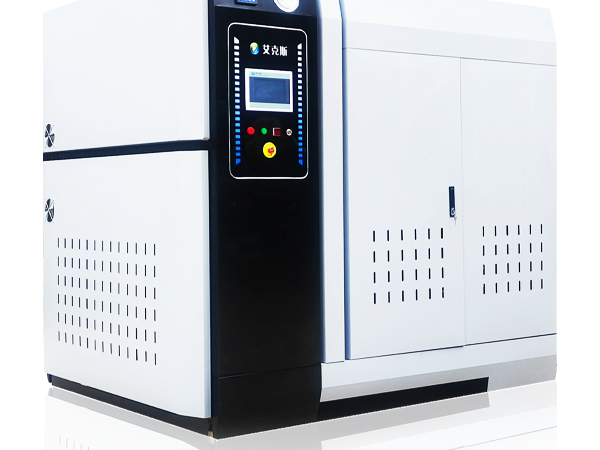
In the era of “coal-to-electricity” transitions and strict environmental regulations, electric boilers have emerged as a clean, efficient alternative for industrial heating, steam generation, hot water supply, and central heating. Electric boilers convert electricity directly into heat without combustion, producing zero emissions at the point of use — ideal for food processing, textiles, pharmaceuticals, hospitals, and green-certified facilities.
However, not all electric boilers are equal. The market features three main types: resistance boilers (电阻锅炉), semiconductor boilers (半导体电锅炉), and electromagnetic boilers (电磁锅炉). Their heating principles, efficiency, safety, durability, and long-term costs differ dramatically.
This blog breaks down the core differences, highlights real-world pros/cons, and explains why AIX Boiler stands out as China’s pioneering leader in electromagnetic boiler technology — delivering near-100% efficiency, true water-electricity separation, and unmatched reliability.
1. Heating Principles: The Fundamental Differences
- Resistance Boilers (电阻式电锅炉) Traditional resistance heating uses electric heating elements (e.g., resistance wires, tubes, or rods) immersed in or in direct/indirect contact with water. Electricity flows through the resistive material, generating heat via Joule effect (I²R), which then transfers to the water through conduction/convection. This is the oldest and simplest electric heating method.
- Semiconductor Boilers (半导体电锅炉) These use semiconductor materials (e.g., high-resistance ceramic or PTC elements) as the heating body. Current passes through the semiconductor, producing heat via resistance. It’s still fundamentally a resistance-based process, but with materials that exhibit high resistance at operating temperatures (around 380°C). Heat transfers to water, often with partial direct contact.
- Electromagnetic Boilers (电磁锅炉) True electromagnetic induction heating uses high-frequency alternating current to generate a magnetic field in a coil. This field induces eddy currents in a metal heat exchanger (e.g., stainless steel tube or vessel), causing the metal itself to heat rapidly from within. Water flows around or through the heated metal — never touching live electrical parts. This “direct internal heating” minimizes losses and enables true water-electricity separation.
AIX Boiler pioneered advanced electromagnetic induction technology in China, integrating high-performance IGBT modules (from Infineon), precise frequency control, and optimized coil designs for industrial-scale applications — making it the benchmark for true electromagnetic boilers.
2. Side-by-Side Comparison Table
| Aspect | Resistance Boiler | Semiconductor Boiler | Electromagnetic Boiler (AIX Boiler) |
|---|---|---|---|
| Heating Principle | Joule resistance in element → conduction to water | Resistance in semiconductor material → heat transfer | Electromagnetic induction → eddy currents in metal → internal heating |
| Water-Electricity Separation | Partial or none (risk of direct contact) | Partial (often indirect, but still contact risks) | Complete (water never touches live parts) |
| Thermal Efficiency | 85–92% (losses from conduction, scaling) | 90–95% (better than basic resistance, but still multi-step transfer) | 98–99.9% (near-zero loss, direct metal heating) |
| Heating Speed | Moderate | Moderate to fast | Extremely fast (instant response, no pre-heating lag) |
| Scaling & Maintenance | High scaling on elements → frequent descaling, failures | High scaling on heater surface → power decay over time | Magnetic water effect reduces scaling dramatically → low maintenance |
| Power Stability | Stable initially, but degrades with scale/age | Power decays noticeably after 1–2 years (material aging) | Stable long-term (no heating body degradation) |
| Safety | Risk of leakage/breakdown if insulation fails | Moderate risk (partial contact) | Highest safety (true separation, no leakage risk) |
| Lifespan | 5–8 years (elements burn out) | 5–10 years (core ages) | 15–20+ years (coil & electronics designed for longevity) |
| Initial Cost | Lowest | Low to medium | Higher (advanced tech) |
| Long-Term Operating Cost | High (energy waste + maintenance) | Medium-high (decay + repairs) | Lowest (energy savings + minimal upkeep) |
| Best Applications | Small residential, low-budget | Mid-range home/commercial | Industrial, strict safety/eco zones, long-term use |
3. Detailed Pros & Cons Breakdown
Resistance Boilers
- Pros: Cheap upfront, simple structure, widely available.
- Cons: Scaling clogs elements quickly → efficiency drops, frequent replacements. Not true separation → safety risks in hard water areas. Higher energy waste from heat loss and light emission. Common in older or budget installations, but users often regret the high repair bills.
Semiconductor Boilers
- Pros: Slightly better than basic resistance (faster initial heat, lower cost than full electromagnetic). Marketed as “modern” resistance.
- Cons: Still resistance-based → same scaling/power decay issues. Heating body ages → output drops year by year (users report “not as good as new” after 1–2 seasons). Partial contact risks leakage. Not truly innovative.
Electromagnetic Boilers
- Pros: Near-100% conversion efficiency, instant heating, magnetic anti-scaling (water molecules realigned, scale loosens), zero leakage risk, stable power, long lifespan. Can use off-peak electricity for cost savings.
- Cons: Higher initial investment (but pays back fast via energy savings and low maintenance). AIX Boiler excels here: Using Infineon IGBT for precise control, double-circulation cooling to protect coils, and modular designs for easy scaling. Many AIX units run 10+ years with minimal issues.
4. Why AIX Boiler Is China’s Leading Electromagnetic Boiler Pioneer
While many brands offer “electromagnetic” products, most are semi-conductor or hybrid. AIX Boiler (Henan AIX Boiler Co., Ltd.) is widely recognized as one of China’s first and foremost true electromagnetic boiler specialists. With decades of R&D (building on 45+ years in boiler manufacturing), AIX pioneered industrial-grade electromagnetic induction systems featuring:
- Full water-electricity separation
- 98%+ efficiency verified in real projects
- Advanced IGBT + resonant circuits for stable high-frequency output
- Magnetic anti-scaling + zero-emission design
- Exports to 80+ countries and partnerships with major enterprises
AIX Boiler’s electromagnetic series (steam, hot water, thermal oil, hot air models) consistently outperforms competitors in efficiency, safety, and durability — earning it a reputation as China’s top choice for genuine electromagnetic technology.
5. Which One Should You Choose?
- Budget + small scale → Resistance (but expect higher long-term costs).
- Mid-range home/commercial → Semiconductor (short-term ok, but watch for decay).
- Industrial, green projects, long-term reliability → Electromagnetic, and specifically AIX Boiler for proven leadership in China.
Switching to AIX Boiler’s electromagnetic boiler means lower bills, zero emissions, minimal downtime, and peace of mind — a smart investment for sustainability and efficiency.
Ready to upgrade to China’s premier electromagnetic boiler technology? Contact AIX Boiler today:
- Email: [email protected]
- Website: https://www.aixboiler.com
- WhatsApp/WeChat: +86 135 9805 9888
- Global 24/7 Support: We’re here to analyze your needs and provide tailored proposals.
Choose AIX Boiler — where true electromagnetic innovation meets industrial reliability.