
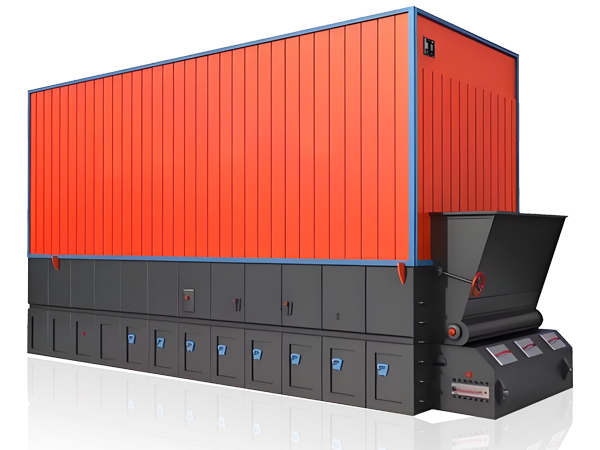
In the rapidly growing field of renewable industrial heating, biomass boilers from AIX Boiler have become a preferred choice for companies seeking sustainable, cost-effective energy solutions. Unlike traditional fossil fuel systems, biomass boilers rely on organic fuels such as wood chips, pellets, agricultural residues (rice husk, straw, bagasse), forestry waste, or even mixed fuels. At the core of every grate-fired biomass boiler lies the grate (炉排) — the critical component that supports the fuel bed, distributes primary combustion air, enables staged burning, and removes ash continuously.
The right grate selection directly determines combustion efficiency, fuel adaptability, emission levels, maintenance frequency, and long-term operating costs. A poorly chosen grate can result in incomplete combustion, excessive slagging, high NOx or particulate emissions, frequent shutdowns, and thermal efficiency dropping below 80%. In contrast, AIX Boiler‘s advanced grate designs help many clients achieve 85–92% efficiency while meeting strict environmental standards.
This article provides a detailed comparison of the main grate types used in biomass boilers, key selection criteria, a side-by-side table, practical considerations, and real-world recommendations — all with AIX Boiler‘s proven solutions in mind.
Why the Grate Is So Important in Biomass Combustion
Biomass fuels are highly variable:
- Moisture content: 8–60%
- Ash content: 0.5–20% (especially high in straw, rice husk, or palm kernel shells)
- Particle size: fines to large chunks
- Alkali/silica content: leading to slagging/fouling in certain fuels
The grate must:
- Distribute fuel evenly and support staged combustion (drying → devolatilization → char burnout)
- Supply controlled primary air without excessive excess air (to reduce stack heat loss)
- Prevent clinker formation and ensure smooth ash discharge
- Adapt to load fluctuations and fuel changes
AIX Boiler engineers these grates with features like zoned air supply, optimized arch design, and secondary overfire air to maximize burnout and minimize emissions — helping clients in textiles, food processing, paper, and energy sectors achieve both economic and environmental goals.
Main Grate Types: Strengths, Limitations, and Applications
- Fixed Grate The simplest and oldest design: stationary bars or plates, often sloped, with manual or semi-automatic ash removal. Advantages: Lowest capital cost, few moving parts, easy to repair. Disadvantages: Labor-intensive, poor fuel mixing, limited to dry/low-ash fuels, low efficiency (70–80%), high emissions. Typical use: Very small boilers (<5–10 t/h) or pilot/demo projects. AIX Boiler rarely recommends fixed grates for industrial clients due to poor performance with variable biomass.
- Chain Grate (链条炉排) A continuous metal chain conveyor moves fuel from the feed hopper to the ash end. Common in AIX Boiler‘s DZL and SZL series biomass boilers. Advantages: Automated fuel/ash handling, stable under constant load, moderate cost, suitable for uniform fuels. Disadvantages: Sensitive to high moisture (>40%) or irregular sizes (risk of bridging), chain/link wear over time, moderate fuel flexibility. Efficiency range: 82–88%. Best for: Consistent wood pellets, chips, or coal-biomass blends in steady operations.
- Reciprocating Grate (往复炉排 / Stepped Pushing Grate) Stepped sections move alternately forward/backward, tumbling and advancing the fuel bed while breaking up agglomerates. Advantages: Exceptional fuel flexibility (handles 30–60% moisture, high-ash fuels like straw/rice husk), high combustion efficiency (88–92%+), excellent burnout, strong slag resistance, good load following. Disadvantages: Higher initial investment, more mechanical parts (though modern designs are very reliable). AIX Boiler often customizes reciprocating grates for clients burning agricultural residues or mixed biomass, delivering superior performance and lower fuel consumption.
- Vibrating Grate (振动炉排) Water-cooled grate vibrates to convey fuel and dislodge ash/slagging. Advantages: Outstanding for high-ash or high-slagging fuels (prevents buildup), good mixing, automated ash removal, extended grate life via cooling. Disadvantages: Higher cost, potential vibration-related wear, requires precise tuning. Best for: Straw, husks, palm empty fruit bunches, or fuels with high alkali/silica content.
- Travelling Grate Wide, overlapping plate design (similar to chain but more robust for large scale). Advantages: Handles high-moisture fuels well, even air distribution, continuous large-capacity operation. Disadvantages: Complex seals/joints, higher maintenance in large systems. Typical use: Utility-scale biomass plants (>50 t/h).
Comparison Table: Grate Types for Biomass Boilers
| Grate Type | Fuel Flexibility (Moisture / Ash / Size) | Combustion Efficiency | Capital Cost | Maintenance Level | Load Following Ability | Best Suited Fuels | Typical Capacity Range | Emissions Performance | AIX Boiler Recommendation Priority |
|---|---|---|---|---|---|---|---|---|---|
| Fixed Grate | Low | 70–80% | Low | Low (but high labor) | Poor | Dry pellets, uniform dry wood | <10 t/h | Poor | Rarely recommended |
| Chain Grate | Medium | 82–88% | Medium | Medium | Good | Wood chips, pellets, some dry residues | 10–100 t/h | Moderate | High for uniform woody fuels |
| Reciprocating Grate | High | 88–92%+ | High | Medium | Excellent | Straw, rice husk, wet chips, mixed biomass | 10–80 t/h | Excellent | Highest for variable / challenging fuels |
| Vibrating Grate | High (especially slagging) | 85–90% | High | Medium | Good | High-ash straw, husks, palm residues | 20–100 t/h | Good | High for slagging-prone fuels |
| Travelling Grate | High | 85–90% | High | Medium-High | Good | Mixed wet biomass | >30 t/h | Good | For very large-scale projects |
Notes: Efficiency figures assume proper air zoning and secondary air systems (standard in AIX Boiler designs). Maintenance level reflects frequency and parts cost over 5–10 years.
Key Selection Factors When Choosing a Grate
- Fuel Analysis Conduct a full fuel test (moisture, ash, ash fusion temperature, particle distribution). High moisture or ash → prioritize reciprocating or vibrating grates from AIX Boiler.
- Boiler Capacity & Operation Mode Small/steady load: chain grate. Medium-large with frequent starts/stops or fuel changes: reciprocating grate.
- Emission Regulations Stricter areas (Europe, California, China Tier 2) favor reciprocating grates due to better burnout and lower unburned carbon.
- Lifecycle Cost A 3–5% efficiency gain from a reciprocating grate can save thousands in fuel annually, often offsetting the higher upfront cost within 2–4 years.
- Maintenance Capability Remote sites with limited skilled labor may prefer simpler chain grates; plants with in-house technicians can benefit from reciprocating designs.
Real-World Applications with AIX Boiler
- Textile mills in Bangladesh and Indonesia: AIX Boiler reciprocating grates burning rice husk/straw achieve 88–91% efficiency and low emissions.
- Wood pellet plants in Europe/North America: Chain grates provide stable, cost-effective operation.
- Large paper mills in South America/Southeast Asia: Vibrating or reciprocating grates handle high-ash bark/residues without frequent cleaning.
- Food processing facilities: AIX Boiler custom reciprocating systems ensure reliable steam for drying/sterilization even with wet biomass.
Final Thoughts
The grate is not just a supporting component — it is the decisive factor in turning variable, renewable biomass into clean, efficient heat. For most modern industrial applications dealing with real-world biomass variability, AIX Boiler strongly recommends reciprocating grates as the optimal balance of flexibility, efficiency, and long-term value. For uniform dry fuels and budget-conscious projects, chain grates remain a solid, proven choice.
AIX Boiler engineers work closely with clients to analyze fuel samples, simulate combustion, and recommend the best grate configuration — ensuring maximum ROI and compliance.
Ready to optimize your biomass boiler performance? Contact the AIX Boiler team today:
- Email: [email protected]
- Website: https://www.aixboiler.com
- WhatsApp/WeChat: +86 130 376 00603
- Global 24/7 Technical Support: Available for consultation, fuel analysis, and customized proposals
Let AIX Boiler help you select and implement the right grate system for a greener, more efficient future.