Description
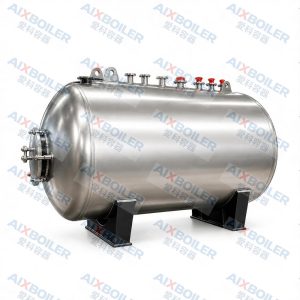
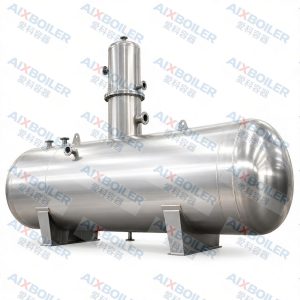
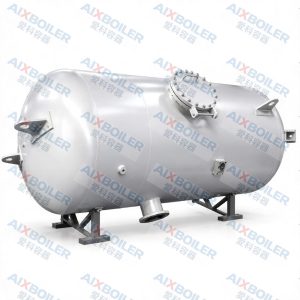
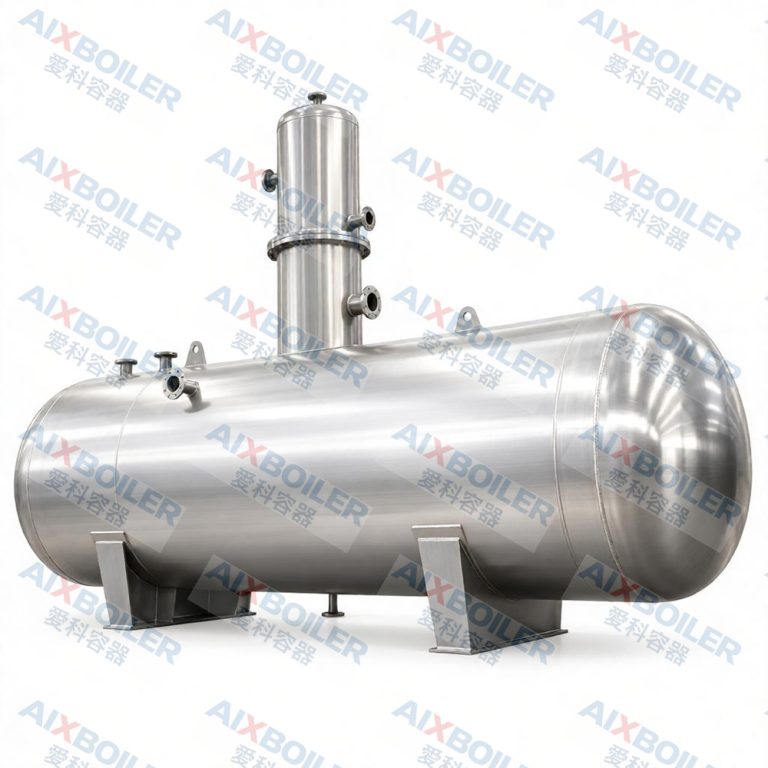
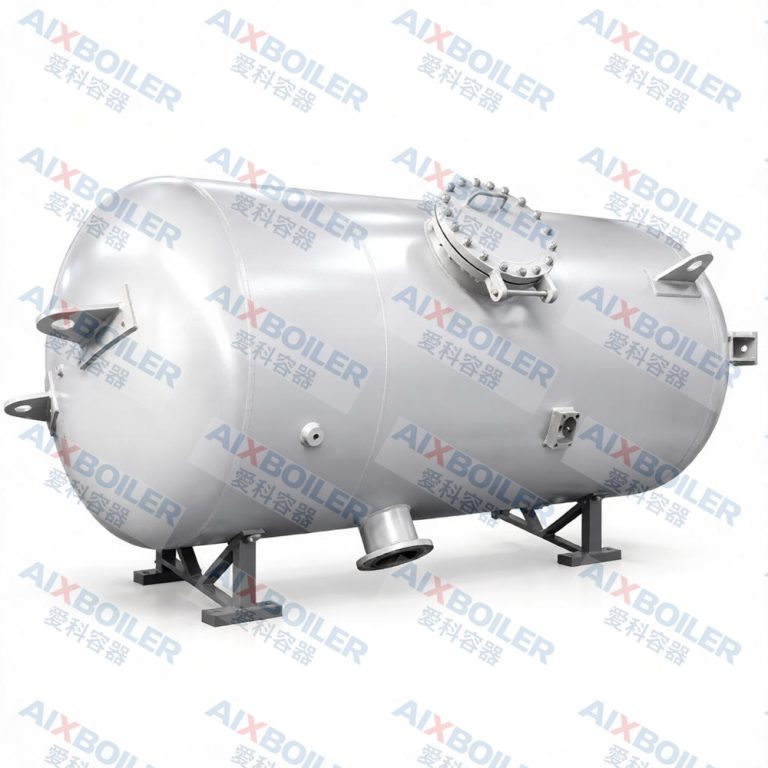
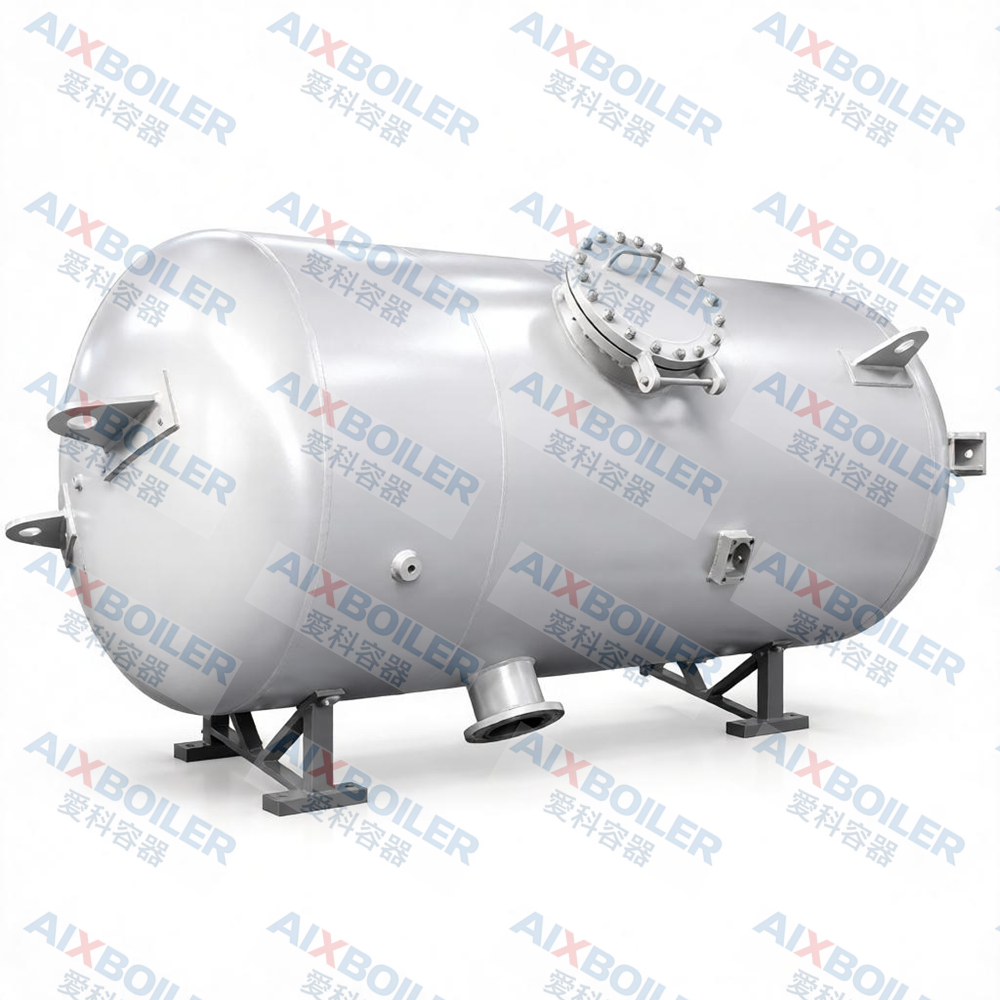
A horizontal receiver is the simplest pressure vessel on site and the one that fails most often when it is bought as an afterthought. AIX-ST tanks are built as a designed vessel: wall thickness calculated from your design pressure and corrosion allowance, saddles positioned for the actual support span, and nozzles oriented so the pipework does not load the shell.
What the AIX-ST range covers
- Volume: 1, 2, 3, 5, 8, 10, 15, 20, 30 and 50 m³, or to your drawing.
- Design pressure: 0.8, 1.0, 1.6, 2.5 and 4.0 MPa; vacuum service on request.
- Material: Q345R / Q245R carbon steel standard; 304 or 316L stainless steel for corrosive media.
- Configuration: horizontal with two saddles, vertical with skirt, or skid-mounted with the pump set.
Technical specification
| Parameter | Range |
|---|---|
| Volume | 1 – 50 m³ (custom larger) |
| Design pressure | 0.8 – 4.0 MPa |
| Design temperature | -20 – 200 °C |
| Shell material | Q245R, Q345R, 304, 316L |
| Corrosion allowance | 1 – 3 mm, project specific |
| Nozzles | Inlet, outlet, drain, vent, safety valve, gauge, manway |
| Testing | Hydro test 1.5× design pressure, NDT on request |
Where it is used
Compressed air receivers behind screw compressors, steam accumulators between a boiler and a batch process, buffer tanks on thermal oil systems, and surge vessels on pump discharge lines. In steam service the tank also acts as a small accumulator: sizing it for the peak draw rather than the average flow keeps the boiler out of short cycling.
Ordering notes
Send the medium, design pressure, design temperature, connection sizes and the available footprint. We return a marked drawing for approval before cutting plate, and the final package includes material certificates, weld records, hydro-test report and nameplate data.
FAQ
Can the tank be supplied with a stainless internals or lining? Yes — 304/316L shell, or carbon steel with rubber / glass-flake lining for water with chlorides.
Is a safety valve included? It is offered as an option; the valve is sized for the inlet flow and set at or below design pressure.
What is the typical lead time? 25–35 days for standard sizes after drawing approval, longer for lined or stainless vessels.