Description
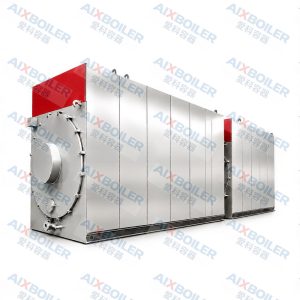
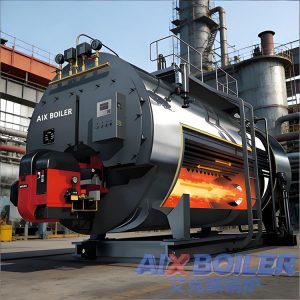
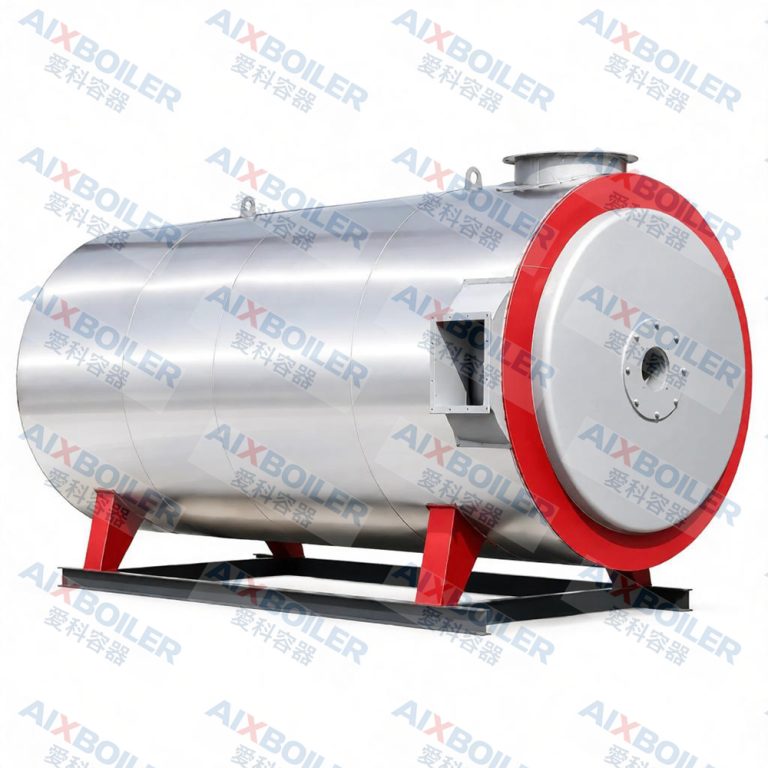
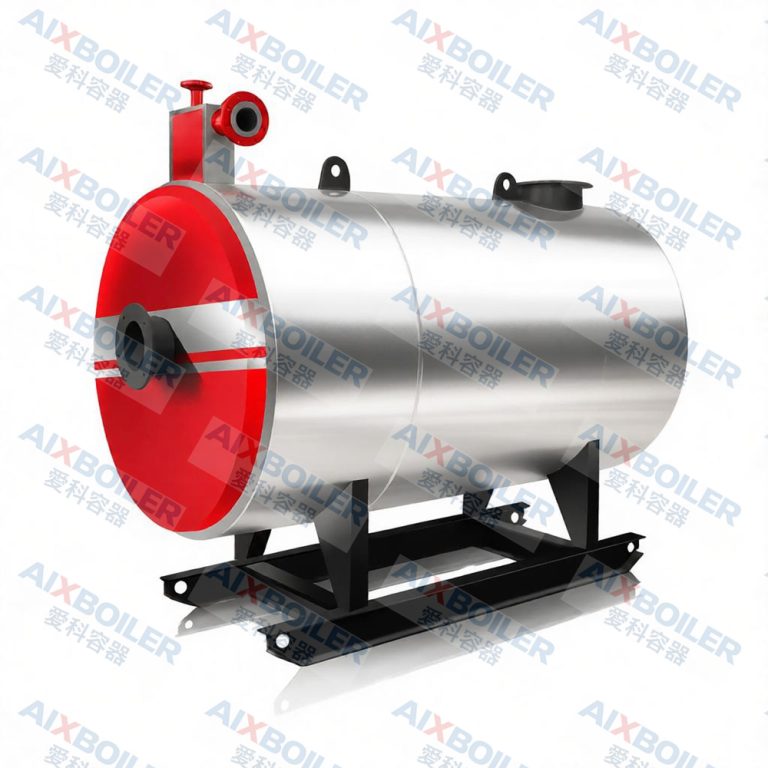
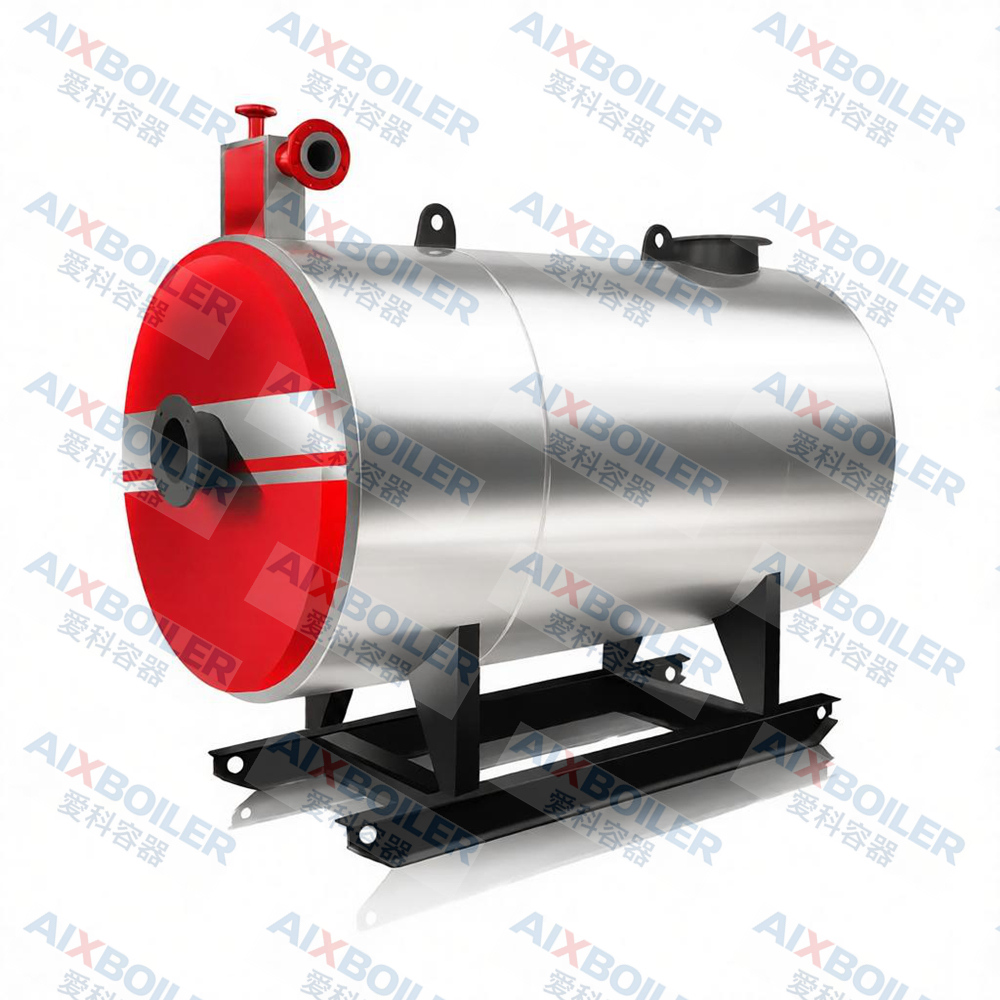
Thermal oil lets a plant reach 300 °C without a high-pressure steam system, a water treatment plant or a licensed boiler operator. The YY(Q)W is a horizontal, three-pass coil heater: the burner fires into a central combustion chamber, hot gas turns through the coil bundle, and the oil leaves at working temperature with a film temperature safely below its decomposition limit.
Design points that matter in service
- Coil velocity: sized above 1.5 m/s so the oil does not coke on the tube wall at low load.
- Expansion and de-aeration: the system includes an expansion tank and a de-aerator; cold-start air in the loop is the most common cause of pump cavitation.
- Control: modulating burner with outlet-temperature PID; a bypass valve protects the coil at start-up.
- Safety: flow switch, high-temperature trip, rupture disc and nitrogen blanket on request.
Technical specification
| Parameter | Range |
|---|---|
| Thermal capacity | 300,000 – 20,000,000 kcal/h (0.35 – 23 MW) |
| Working temperature | Up to 300 °C (320 °C special) |
| Design pressure | 0.8 – 1.0 MPa |
| Thermal efficiency | ≥ 92 % (gas), ≥ 90 % (oil) |
| Fuel | Natural gas, LPG, diesel, heavy oil, dual fuel |
| Structure | Three-pass horizontal coil, insulated steel casing |
Typical duties
Reaction vessels and distillation columns in chemicals, calenders and presses in rubber and plastics, dyeing machines in textiles, asphalt tanks, and drying ovens in wood and paper. The common thread is a process that needs a steady 180–300 °C and cannot accept the pressure of saturated steam at that temperature.
Installation and commissioning
The heater is delivered skid-mounted with the burner, circulation pump and control panel. Commissioning covers a cold flush, a gradual heat-up (typically 20 °C per hour through the first 100 °C to drive off moisture), and a hot run that confirms flow and differential pressure across the coil.
FAQ
Does thermal oil need replacing? Yes — sample annually; most oils are changed every 3–5 years depending on film temperature and aeration.
Can it run on biogas? Yes, with a burner sized for the lower calorific value and a gas train matched to the supply pressure.