Description
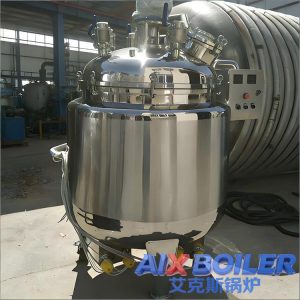
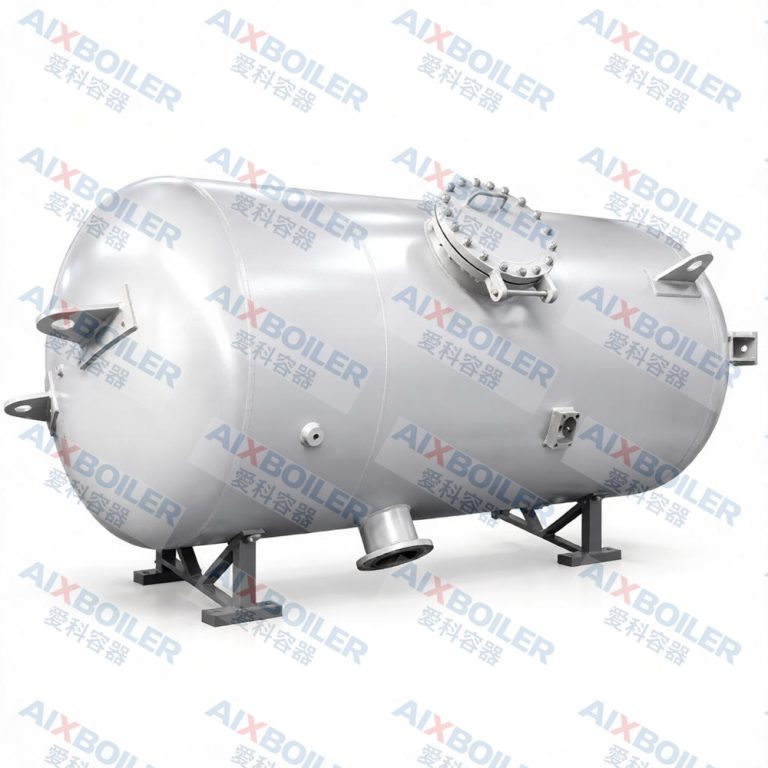
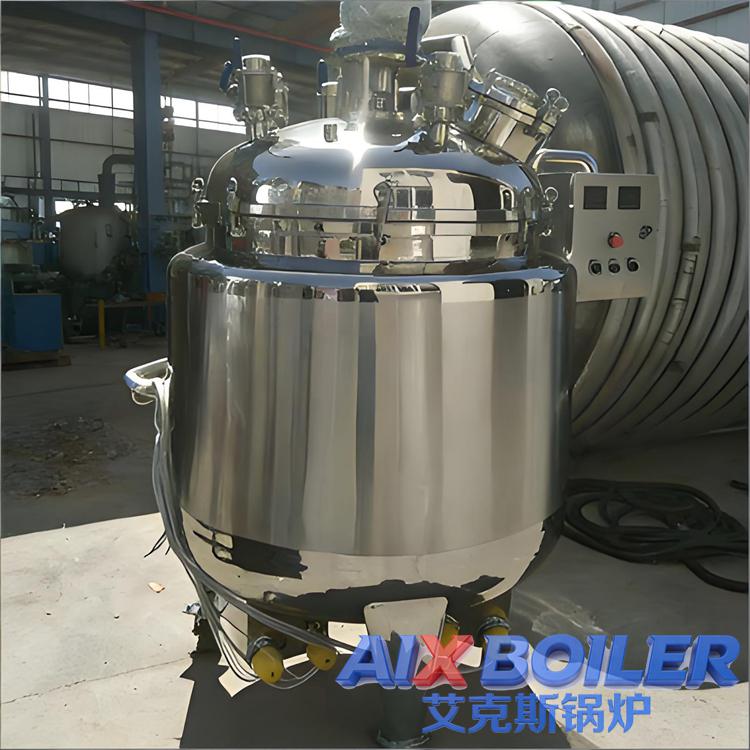
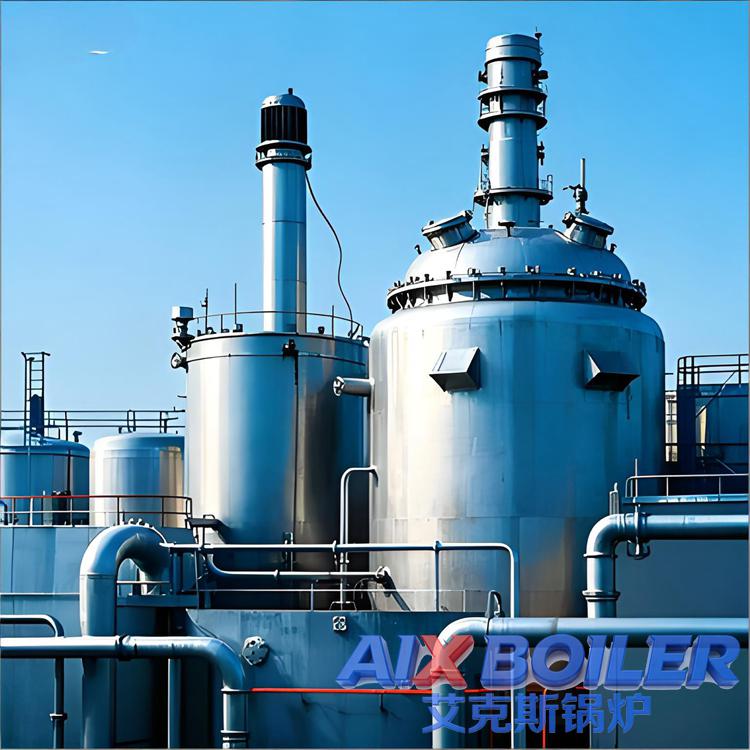
A reaction kettle is a pressure vessel with a mixing problem inside it. Getting the jacket, the agitator and the discharge to work together is what separates a usable reactor from a tank with a stirrer bolted on.
Configuration
- Shell: 304 or 316L, wall thickness from design pressure, internal finish 0.4 µm Ra on request.
- Jacket: full jacket, half-pipe coil or dimple plate for heating and cooling.
- Agitator: anchor, pitched-blade turbine, propeller or helical ribbon, selected from the viscosity range.
- Seal: mechanical seal, packed gland or magnetic drive for hazardous media.
- Top: manway, sight glass, dip tube, temperature pocket, spare nozzle.
Technical specification
| Parameter | Range |
|---|---|
| Volume | 50 L – 30 m³ |
| Design pressure (shell) | -0.1 – 2.5 MPa |
| Design pressure (jacket) | 0.3 – 1.6 MPa |
| Design temperature | -20 – 300 °C |
| Agitator speed | 20 – 500 rpm, VFD |
| Finish | Pickled and passivated, or mirror polish |
Choosing the agitator
Below 10,000 cP an anchor or turbine is enough; above that a helical ribbon or a close-clearance anchor with wall scrapers keeps the product moving and the heat transfer alive. For gas-liquid reactions the impeller is chosen for surface renewal rather than bulk flow.
Documentation
Material certificates, weld maps, radiography or dye-penetrant reports as agreed, hydro-test certificate, and a general arrangement drawing that matches the vessel as built.
FAQ
Can the kettle be built to a drawing I already have? Yes — send the GA drawing and the design conditions; we return a marked-up version for approval.
Do you supply the thermal skid? Yes, with a matching thermal oil or water unit sized to the jacket duty.