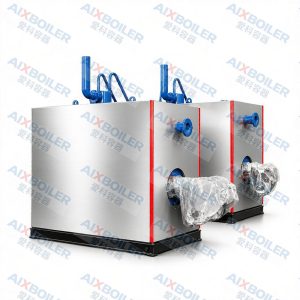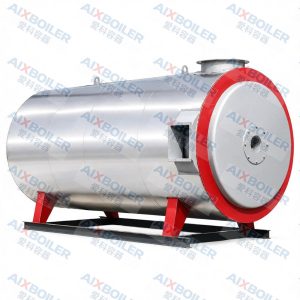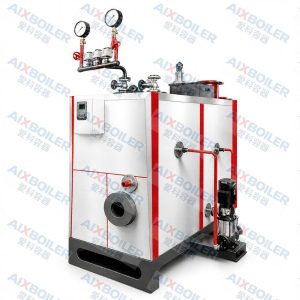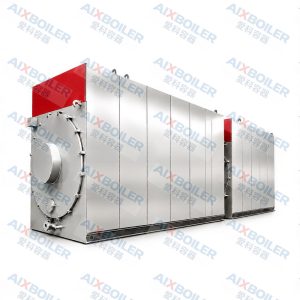
Description
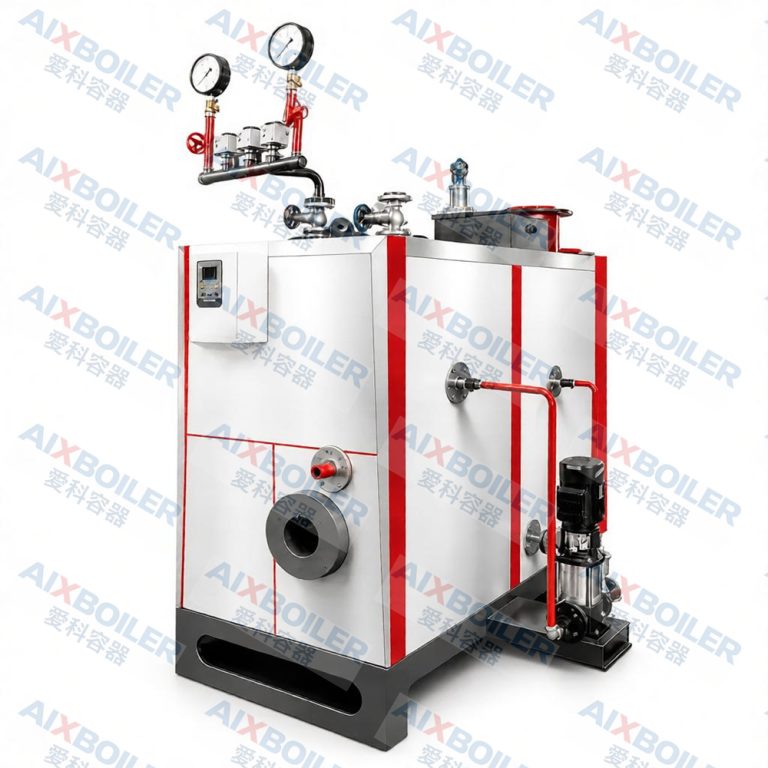
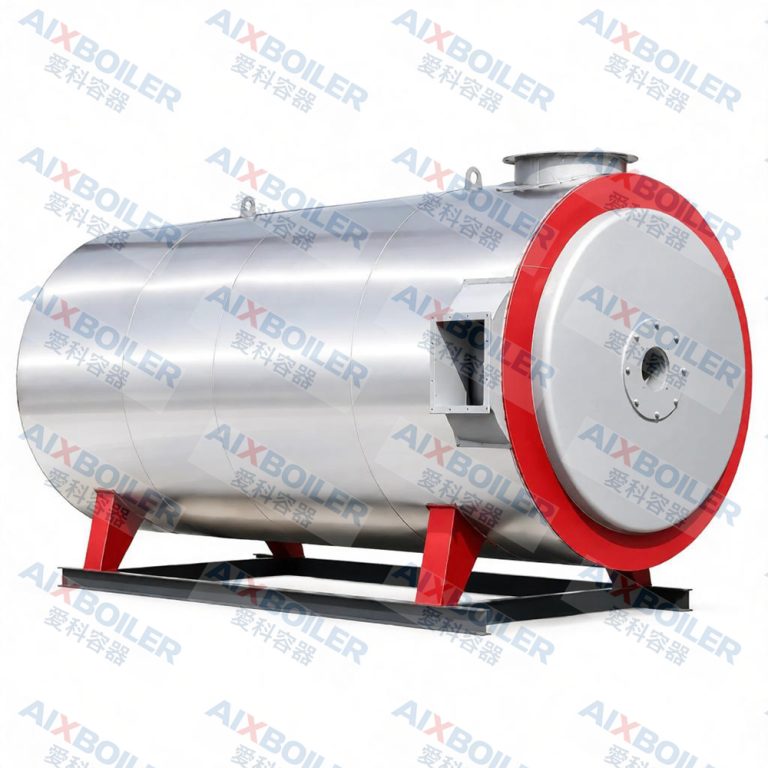
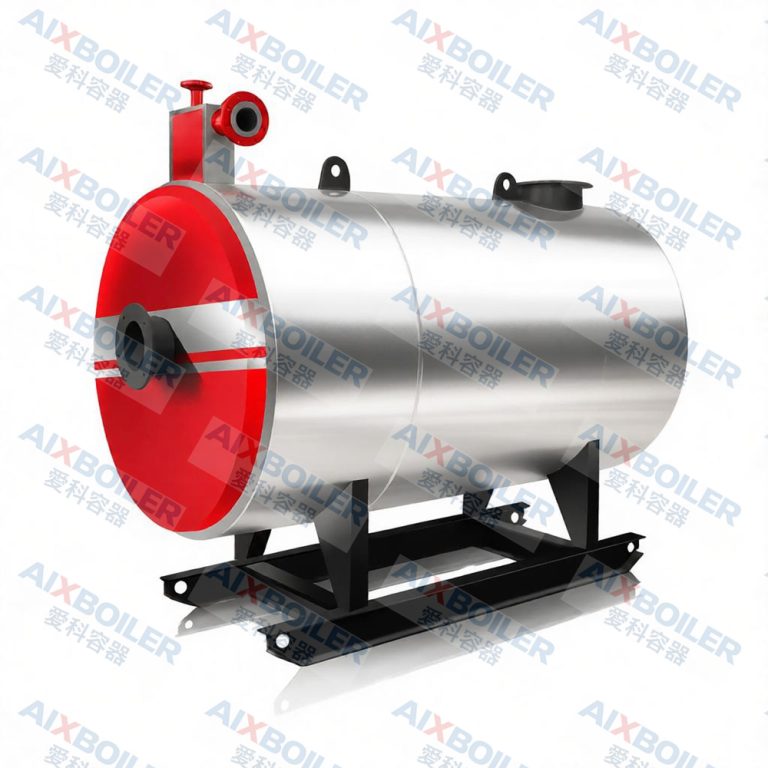
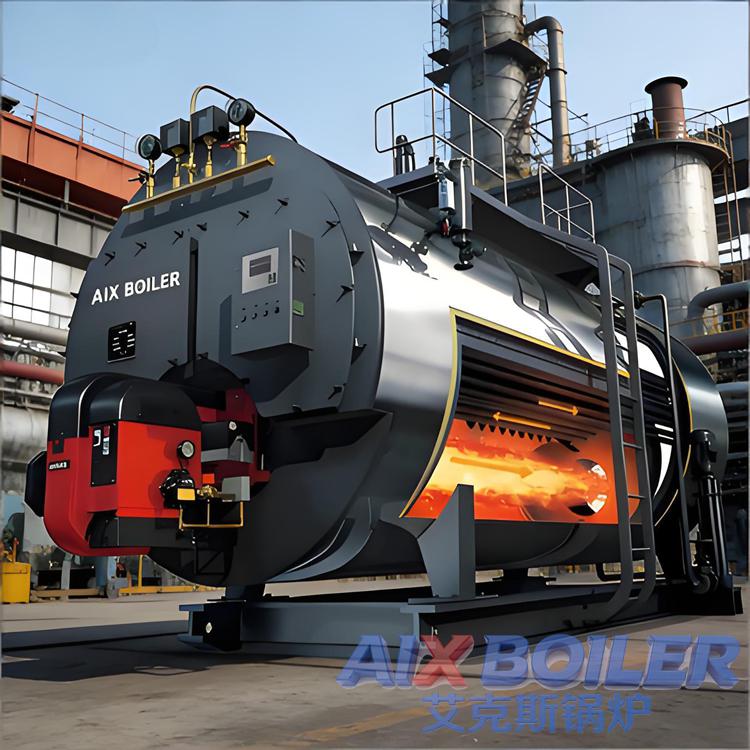
Hot water is a simpler duty than steam — no blowdown, no steam trap losses, no water-level control — but the boiler still has to match the circuit. The CWNS is atmospheric and the WNS pressurised; both are fire-tube designs supplied with a matched burner, and the choice between them follows the system pressure and the temperature programme.
Atmospheric or pressurised
- CWNS: open expansion, up to 95/70 °C, simplest and cheapest to install.
- WNS: sealed circuit up to 130/70 °C and 1.6 MPa, needed for higher temperatures and taller buildings.
Technical specification
| Parameter | Range |
|---|---|
| Thermal capacity | 0.7 – 14 MW |
| Supply / return | 95/70 °C, 115/70 °C, 130/70 °C |
| Design pressure | 0.1 MPa (CWNS) – 1.6 MPa (WNS) |
| Efficiency | ≥ 95 % with economiser |
| Fuel | Natural gas, LPG, diesel, heavy oil |
| NOx | ≤ 30 mg/m³ with low-NOx burner |
System design points
A hot water boiler needs a minimum return temperature to avoid condensation on the fire-tube — typically 60 °C for gas firing. Where the load returns colder, a three-way mixing valve or a recirculation pump protects the boiler. The expansion vessel and the safety valve are sized from the water volume, not the boiler output.
Applications
District heating substations, greenhouses, hotels, food processing, and any process that needs 70–130 °C water rather than steam. In retrofit projects the boiler often replaces a steam system to remove trap losses and reduce operating pressure.
FAQ
Can it supply both heating and process water? Yes, through a plate heat exchanger that separates the two circuits.
What water treatment is needed? Softening for make-up, plus a corrosion inhibitor and periodic testing for pH and conductivity.