Description
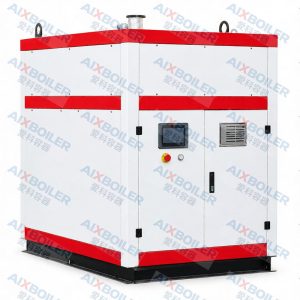
An electric hot air furnace is a duct with heating elements in it, done properly: element watt density matched to the air velocity, a stainless chamber, and a control loop that holds the outlet temperature without cooking the element when the airflow drops.
Design
- Finned or bare tubular elements in 321 or 316L stainless steel.
- Chamber insulated with mineral wool and clad in stainless, surface below 45 °C.
- Airflow proving switch interlocked with the element contactors.
- SCR or staged control; outlet sensor in the mixed-air stream.
Technical specification
| Parameter | Range |
|---|---|
| Heating capacity | 30 – 2,000 kW |
| Outlet temperature | 100 – 400 °C |
| Air flow | 1,000 – 60,000 m³/h |
| Efficiency | 99 % |
| Control | SCR / staged, PID, 4–20 mA or Modbus |
| Options | Filter, silencer, recirculation damper, explosion-proof |
Where it fits
Clean rooms and pharmaceutical dryers where combustion products are unacceptable, lab ovens, powder-coating curing where the air must be oil-free, and small dryers where a gas connection is not available. It is also used as a backup or trim heater on a gas-fired drying line.
Running cost
At 99 % efficiency the furnace converts almost all the electricity into air heat, but electricity per kWh usually costs more than gas. The case is strongest for low duties, intermittent operation and sites where the avoided flue and gas connection cost is high.
FAQ
Can it be installed in a duct? Yes — flanged spool sections are supplied for horizontal or vertical duct mounting.
What happens if the fan stops? The airflow switch drops the elements immediately; the over-temperature cut-out is a second line of defence.