Description
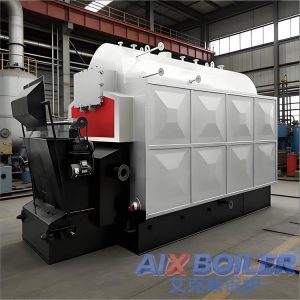
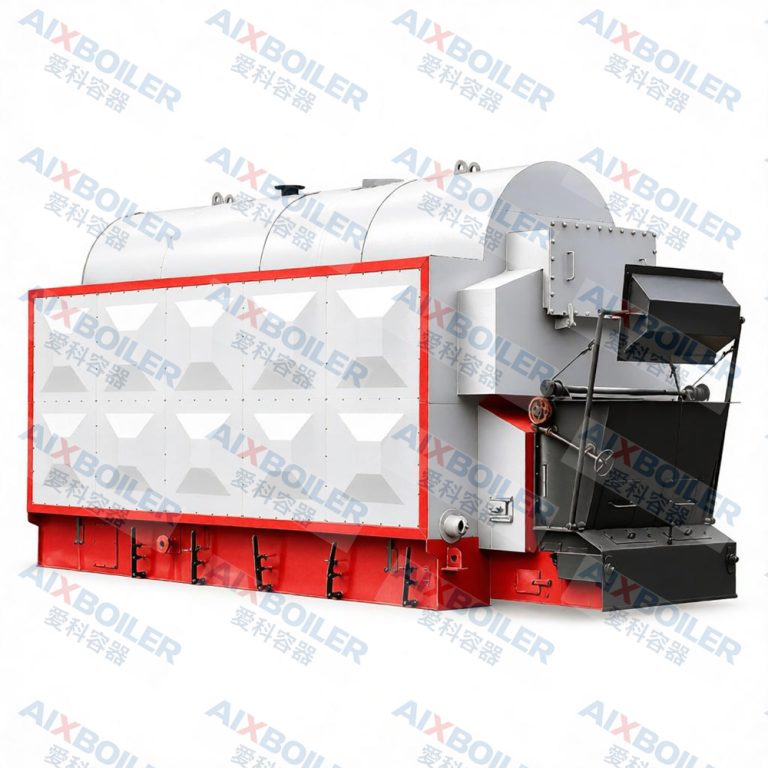
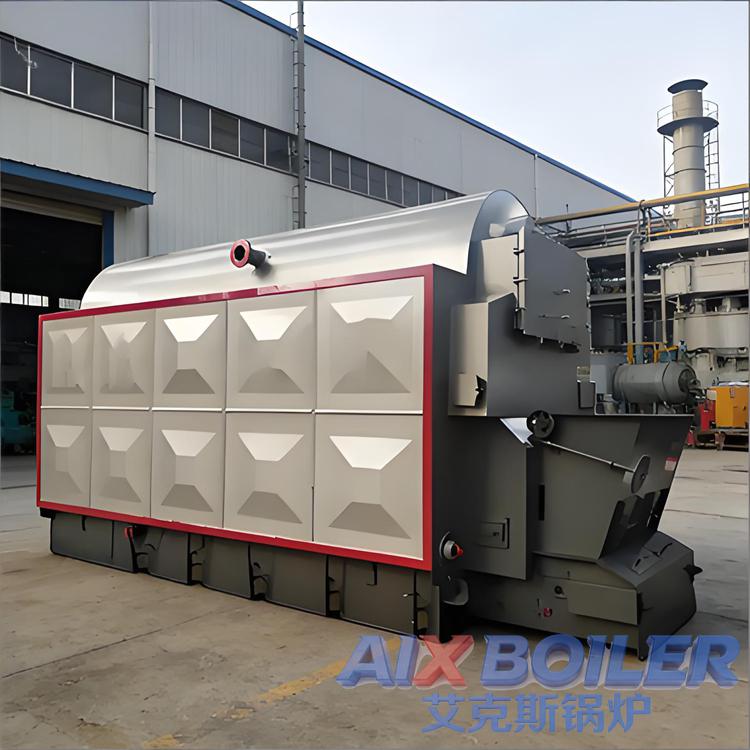
Solid fuel is still the cheapest heat in many regions, provided the furnace suits the fuel. The CDZL (single-drum) and SZL (double-drum) are grate-fired hot water boilers built around the fuel you actually burn — not around a laboratory sample of it.
Fuel and furnace matching
- Wood chips and pellets: chain grate with a longer furnace and secondary air for volatile burn-out.
- Palm kernel shell, rice husk, bagasse: reciprocating grate and a larger furnace volume to handle high ash and moisture.
- Coal: chain grate with a coal spreader and a matched ash pit.
- Multi-fuel: dual feeding with separate hoppers where supply changes seasonally.
Technical specification
| Parameter | Range |
|---|---|
| Thermal capacity | 1.4 – 29 MW (2 – 40 t/h equivalent) |
| Outlet / return | 95/70, 115/70, 130/70 °C |
| Design pressure | 0.7 – 1.6 MPa |
| Efficiency | 82 – 86 % depending on fuel moisture |
| Fuel moisture | Up to 35 % with preheated air |
| Ash handling | Manual, screw or chain conveyor |
What decides performance
Three things: fuel size consistency, primary-to-secondary air ratio, and grate speed. A boiler that is fed oversize chips will run at 70 % efficiency no matter what the nameplate says, so the fuel specification is written into the supply contract.
Emissions and dust
Cyclone and multi-tube dust collectors are standard; bag filters or electrostatic precipitators are added where particulate limits are tight. Low-NOx furnace staging is available for regions that regulate biomass NOx.
FAQ
Can it burn both wood and coal? Yes, with a grate and air profile sized for the harder of the two fuels.
How much ash is produced? Typically 1–3 % of fuel mass for wood, 8–15 % for coal; the ash pit is sized for 24 hours of operation.