Description
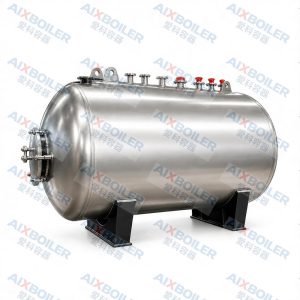
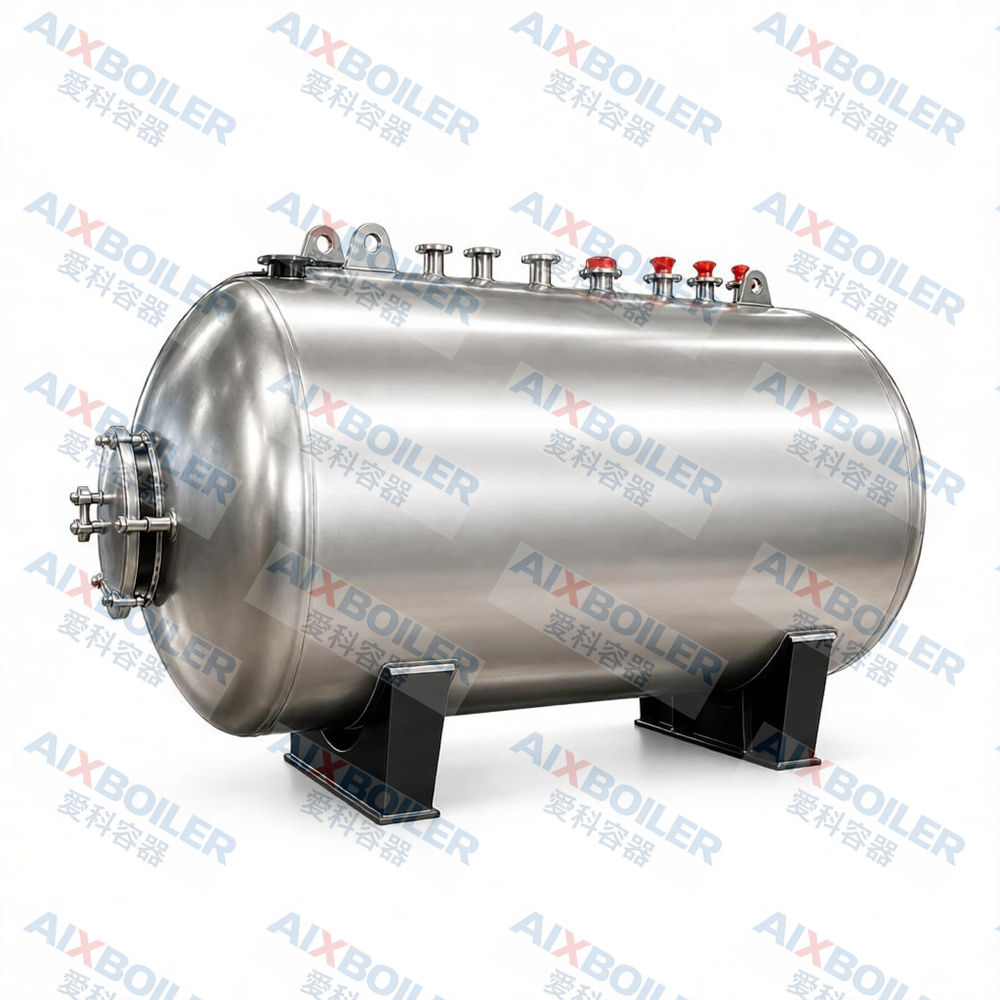
A steam manifold is a pressure vessel that distributes steam from one boiler to several users. Done badly it becomes the wettest, noisiest part of the plant; done properly it separates condensate before the steam leaves and gives each branch its own isolation.
Design elements
- Header diameter sized for 15–20 m/s steam velocity at peak flow.
- Branches on the top of the header, with a drip leg and trap pocket at the low end.
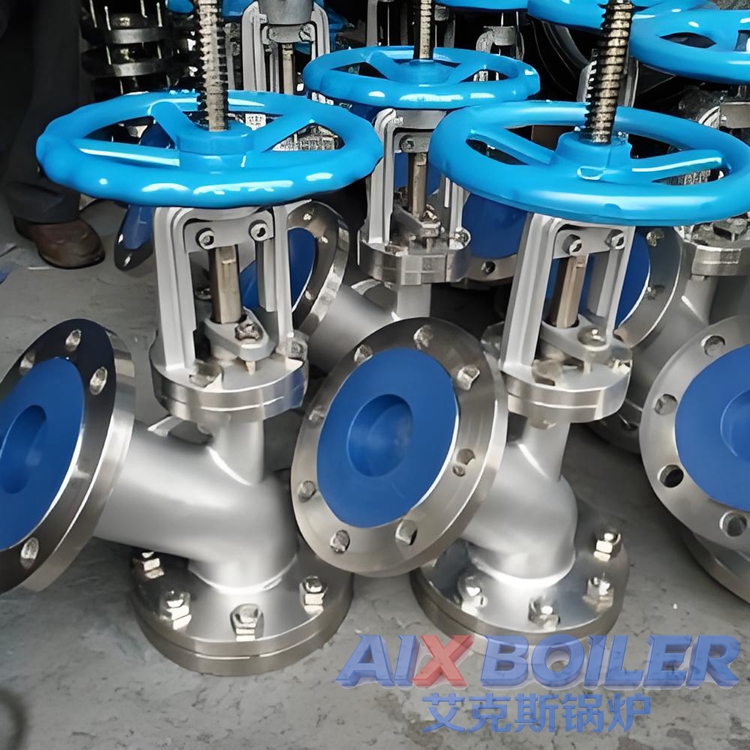
- Isolation valve and trap set per branch; pressure gauge and thermometer tappings.
- Safety valve connection and a drain at the lowest point.
Technical specification
| Parameter | Typical |
|---|---|
| Design pressure | 1.0 – 2.5 MPa |
| Design temperature | Up to 350 °C |
| Material | Carbon steel, 304 / 316L |
| Branch sizes | DN25 – DN200, to schedule |
| Insulation | Mineral wool with aluminium cladding |
| Testing | Hydro test, NDT on request |
Why the drip leg matters
Steam leaving a boiler carries moisture. If the header has no low point, that moisture travels into every branch and shows up as water hammer at the far end of the plant. A header with a properly trapped drip leg removes most of it before distribution.
Ordering
Provide a sketch with branch sizes, flows, valve types and the space available. We return a fabrication drawing with the header diameter, branch spacing and trap positions for approval before welding.
FAQ
Can the manifold include the pressure reducing valve? Yes, a PRV station can be mounted on the header skid.
Is it supplied insulated? Optional; insulation and cladding are fitted in the workshop where specified.